
UniSat
UniSat is a non-custodial, open-source Bitcoin wallet extension that acts as a gateway to the Bitcoin ecosystem, including Ordinals, BRC-20 tokens, and Alkanes. The UniSat Wallet gives users direct control over their assets without requiring registration or identity verification, and it does not hold or control private keys on your behalf. Its privacy-first design and audited, open-source security model are intended to keep your Bitcoin-related activity under your control. This reference is based on official documentation and public open-source repositories, and is current as of October 2026; availability and permitted use may vary by jurisdiction, so users should check local rules before downloading or using the wallet.
UniSat
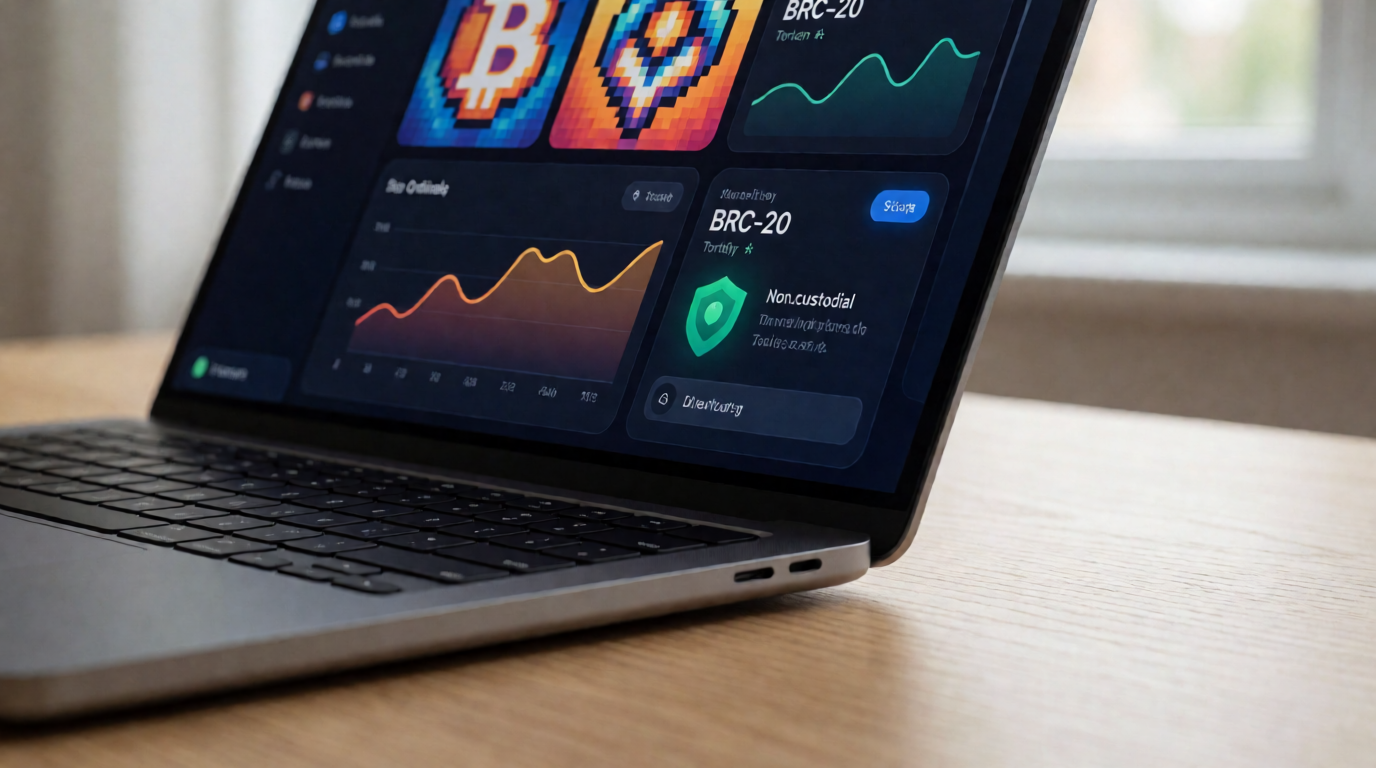
UniSat is a non-custodial Bitcoin wallet deployed as a browser extension primarily for Google Chrome and Chromium‑based browsers. The core principle of a 100% non‑custodial wallet means that all private keys are generated, stored, and managed exclusively on the user’s own device; neither the extension nor the development team can access, freeze, or recover user funds. This design ensures that control over bitcoin and related digital assets remains entirely with the individual.
The UniSat Wallet extension functions as a practical interface for interacting with the Bitcoin network and its growing ecosystem of meta‑protocols. Users can manage Bitcoin ordinals—unique digital artifacts inscribed directly onto individual satoshis—as well as BRC‑20 tokens, Runes, and Alkanes. These features allow the wallet to serve as a unified tool for viewing, transferring, and in some contexts trading these assets without relying on external custodians.
The extension is open‑sourced and has undergone public security audits, with its code available for community inspection. Its privacy‑first approach is reflected in the absence of mandatory registration, identity verification, or collection of personal data. This overview is based on UniSat’s official documentation as of October 2026. Because cryptocurrency regulations differ across jurisdictions, users should independently verify the extension’s availability and compliance in their country before use.
Key Concepts and Terminology
UniSat’s “Gateway to the World of Bitcoin” positioning reflects its role as a bridge between the Bitcoin base layer and meta-protocols like Ordinals, BRC‑20, Runes, and Alkanes. The wallet is Open‑Sourced and Audited; its publicly available code on GitHub has undergone independent security reviews. Privacy First means no personal data collection or tracking, while Robust Security relies on on‑device key generation, encrypted storage, and local signing—your seed phrase never touches a server. According to its documentation (last verified October 2026), the extension supports all major Bitcoin token standards: Ordinals allow data inscription on satoshis, BRC‑20 is an experimental fungible token standard, Runes offers a more efficient UTXO‑based token protocol, and Alkanes enables smart‑contract logic on Bitcoin. Geographical restrictions are not enforced by the wallet; users should check local laws.
Operational Principles and Security Model
The UniSat wallet operates on a 100% Non-Custodial basis: private keys are generated and stored exclusively on the user’s device; all transaction signing is performed locally. No personal data is collected, and no account or KYC verification is required—this guarantees privacy by design. The entire codebase is open-source and publicly auditable on GitHub. Independent audited reports confirm the absence of backdoors and the integrity of the non‑custodial architecture, contributing to a robust security model where only the user holds the keys. Seed phrase management is the user’s responsibility; hardware wallet support adds an extra layer. As a software tool, regional restrictions may apply—verify local laws. The GitHub repository and audits provide verifiable methodology; check the latest updates for current information.
Examples of UniSat in Practice
The UniSat wallet supports a range of practical interactions with Bitcoin meta‑protocols. A common use case is the inscription of ordinals: a user selects a satoshi and attaches digital content, such as an image or text, directly on the Bitcoin blockchain. The wallet constructs the transaction, which the user then signs locally and submits to the Bitcoin network. Once confirmed, the inscription becomes permanently visible in the integrated explorer, where anyone can verify its on‑chain provenance without relying on a central database.
BRC‑20 tokens follow a similar pattern. Using UniSat, a participant can create a new BRC‑20 token by issuing a deploy inscription, then mint or transfer tokens via additional inscriptions. These operations are signed and broadcast as standard Bitcoin transactions. After creation, tokens can be listed for trade on compatible marketplaces; every trade is settled on‑chain, with the final state auditable through the explorer.
More recent protocols, such as runes, offer a more compact alternative to BRC‑20. Through the wallet, users can mint, transfer, or destroy runes by submitting a single transaction that encodes the operation. The explorer then displays runes balances and transaction histories, providing transparent insight into the entire lifecycle.
For experimental purposes, alkanes enable more advanced logic. By signing transactions that invoke alkane‑based state transitions, a user can explore contract‑like behavior within Bitcoin’s security model. Each alkanes interaction is recorded on the blockchain and can be examined in the explorer, reinforcing the open‑source and auditable nature of the platform. The wallet extension is available globally; however, users should confirm that their local jurisdiction permits the use of non‑custodial Bitcoin wallets and related token standards.
Related Topics and Ecosystem
The emergence of the Bitcoin Ordinals protocol and subsequent meta‑protocols like BRC‑20, Runes, and Alkanes has fundamentally reshaped what a bitcoin wallet can do. Where legacy wallets were designed purely for moving satoshis, today’s landscape demands direct, trust‑minimised interaction with on‑chain assets—inscriptions, fungible tokens, and domain names—without sacrificing the self‑sovereignty that defines Bitcoin itself.
Browser‑extension wallets such as UniSat embody this paradigm shift. Unlike older desktop or mobile wallets that often kept the user at a distance from the creation and management of meta‑protocol items, a well‑architected unisat_wallet places full control in the browser, signing transactions locally and never sharing private keys. The difference is tangible: users can inscribe, send, and list Ordinal‑based collectibles in seconds, directly from the same environment where they browse marketplaces and explorers.
The UniSat extension is publicly listed on the Chrome Web Store—a platform operated by Google—and can be found by searching its name. (The exact availability may vary by region; users should verify that the extension is accessible in their locale.) For developers, UniSat also supports the Bitcoin testnet and Signet, enabling safe experimentation with ordinals, BRC‑20, and Runes without risking real bitcoin. This test‑network access is an entry point for builders who want to validate new asset classes before releasing them on mainnet.
It is instructive to position UniSat alongside other Bitcoin‑adjacent protocols. The Lightning Network focuses on instant, low‑cost payments, while Stacks brings expressive smart contracts to Bitcoin via a separate consensus mechanism. UniSat is neither a payment channel manager nor a smart‑contract layer; it is a wallet specifically optimised for Bitcoin’s meta‑protocol ecosystems—managing inscriptions and fungible tokens directly on Layer 1, while staying fully non‑custodial and open‑source.
In an era where on‑chain asset ownership is shifting from centralised platforms to user‑held keys, a wallet that combines a frictionless browser extension, auditable code, and zero‑personal‑data collection sets a high bar. As of this writing, the UniSat codebase remains open and publicly reviewable on GitHub, and the extension continues to evolve in step with Bitcoin’s rapidly expanding meta‑protocol frontier. This model—where the user is the ultimate custodian—represents the logical north star for the next generation of bitcoin asset management.
FAQ
UniSat is a non‑custodial, open‑source Bitcoin wallet extension that acts as a gateway to Bitcoin’s expanding ecosystem of Ordinals, BRC‑20 tokens, and Alkanes. Unlike traditional wallets that focus solely on BTC transfers, UniSat enables direct in‑browser interaction with on‑chain collectibles and tokenised assets. Its architecture keeps private keys exclusively on the user’s device, as confirmed by the official documentation (October 2026).
Safety relies on its fully non‑custodial model and publicly auditable open‑source codebase. Private keys are generated and stored locally; no personal information is collected. Independent security audits have been performed, and the repository is available on GitHub. Nevertheless, users must follow strong security practices (backing up the seed phrase, securing the device) and verify that local regulations permit cryptocurrency use, as certain jurisdictions impose restrictions.
Ordinals is a protocol that assigns a unique number to each satoshi (the smallest Bitcoin unit), allowing arbitrary data—such as images or text—to be inscribed directly on the Bitcoin blockchain. UniSat integrates an Ordinals marketplace and in‑wallet viewer, enabling users to inscribe, browse, and transfer these digital artifacts seamlessly within the extension. All actions remain non‑custodial, as per the project’s published guides (October 2026).
BRC‑20 is an experimental token standard that uses Ordinal inscriptions to create fungible tokens on Bitcoin. Alkanes is a related token framework that UniSat also supports. The wallet offers a native interface for minting, deploying, and transferring BRC‑20 tokens, and it handles Alkanes transactions. These features extend Bitcoin’s utility, though users should be mindful of technical risks and network fees. Details are documented in the open‑source code and community resources (October 2026).
The official UniSat Wallet is available as a browser extension for Google Chrome and Chromium‑based browsers. Install it directly from the Chrome Web Store by searching for “UniSat Wallet” and verifying that the publisher is “UniSat”. Always obtain the extension from the official store to avoid phishing. The source code is also published on GitHub, allowing independent verification of the build (as of October 2026).
Yes, UniSat includes support for Bitcoin testnet and signet. Within the wallet settings, users can switch networks to testnet or signet for development and testing without risking real BTC. This is particularly useful for experimenting with Ordinals, BRC‑20, or other protocols. The feature is described in the official developer documentation and confirmed by the publicly available open‑source codebase (October 2026).
UniSat is 100% non‑custodial: the wallet never holds, controls, or has access to your private keys or funds. All keys are generated and stored locally on your device; transaction signing happens client‑side. This eliminates counterparty risk but places full responsibility on the user for safeguarding the seed phrase. The open‑source repository and published audit reports (October 2026) confirm the absence of custodial backdoors. Users must also determine if local cryptocurrency regulations apply.